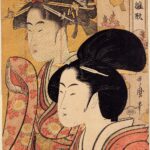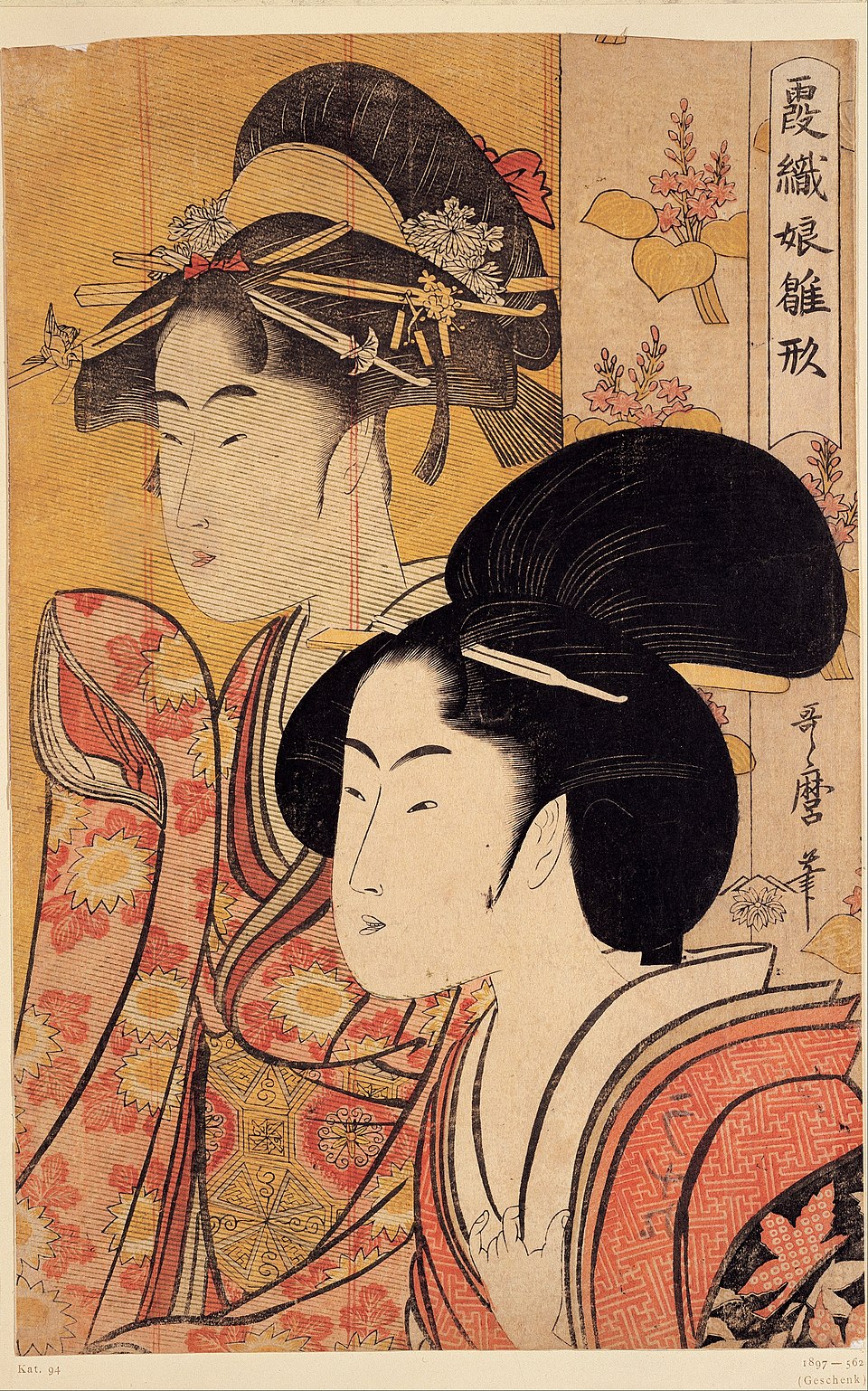

His art Ukiyo-e is one of the most important chapters of Japanese culture. It developed mainly from the 17th to the 19th century and reflects a world of aesthetics, symbolism and everyday life. These woodblock prints were not just images, they were windows into a «"floating world"», a world of momentary beauty and constant change.

Table of contents
Historical context and development
The term ukiyo-e (floating world) comes from the philosophy of the ephemeral. This philosophy was dominant in Edo (present-day Tokyo) during the period 1603–1868. It is associated with the philosophy that life is fleeting. Society was stable, the economy was growing, and urban centers were filled with new forms of entertainment, such as theaters, art districts, and geisha houses. Within this environment, the need to capture everyday life, famous actors, beautiful women, and exotic landscapes was born.
Initially, Ukiyo-e were monochrome ink drawings, but the technological development of woodblock printing led to the creation of colorful compositions. (nishiki-e). Artists, craftsmen, engravers and printers collaborated to produce works of high technical excellence. The Ukiyo-e style was born from the fusion of the realistic narrative of the emaki images of the Kamakura period and the mature decorative style of the Momoyama and Tokugawa periods. Hishikawa Moronobu is considered the first master of this art. The transition from monochrome to two-tone prints was made by Okumura Masanobu.
Thematic and Technical
Ukiyo-e depicted subjects that reflected the social life and values of the time. The method of woodblock printing was central to the production of Ukiyo-e. As such, the process required the collaboration of many disciplines. These included the artist and the engraver. They also included the printer who applied the inks and woodblocks to the paper. Finally, the publisher who financed and distributed the works also participated. From black and white prints, the technique evolved into nishiki-e (multicolor printing) in the 18th century, offering color vibrancy and high aesthetics. Because the printing was manual, it was possible to achieve the effect of color gradation and blending in the background.
Ukiyo-e themes included:
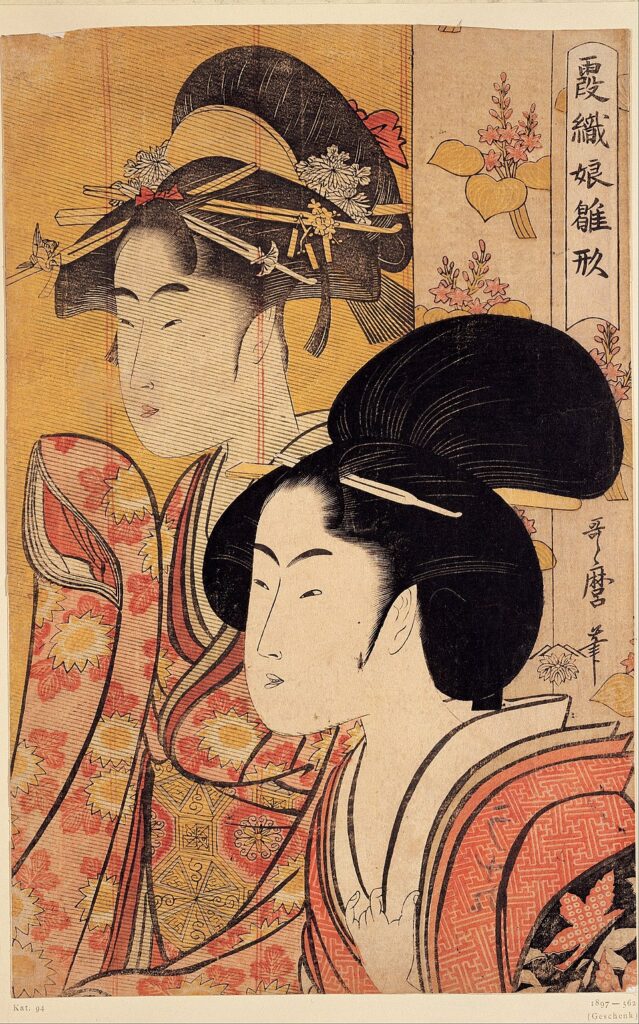
- Bijin-ga: depictions of beautiful women, such as Kitagawa Utamaro
- Yakusha-e: portraits of Kabuki actors, often in a strongly dramatic style
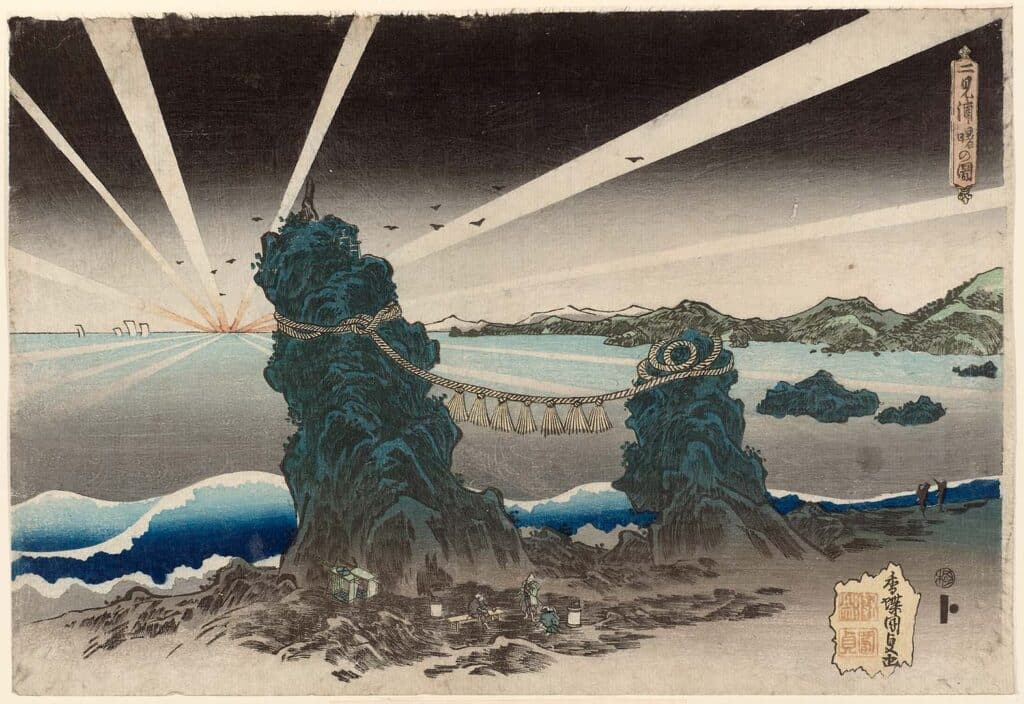
- Fūkei-ga: landscapes and natural scenes, with the most famous representative being Katsushika Hokusai and him Utagawa Hiroshige
- Shunga: erotic scenes, often symbolic and poetic, which formed an important part of the market
Use of materials and technique
The art of Ukiyo-e is based on a particularly demanding and strictly structured use of materials. This use contributed decisively to the unique aesthetics of the works. Cherry wood played a central role (sakura). It was used for engraving blocks because it was hard and durable. This allowed for detailed engraving and multiple prints without significant wear.
Inks were mainly derived from natural pigments. Such is the sumi (black ink made from soot), vegetable dyes and minerals. A typical example is Prussian blue, which was introduced from Europe in the 19th century. This radically changed the palette of ukiyo-e landscapes. The paper washi tape, made from mulberry fibers, provided elasticity, strength and high absorbency, allowing for precise color impressions. The inks were applied by manual pressure using the tool barren. This gave the works a tactile quality. It provided subtle differences that made each print unique, even within the same edition.
Influence on Western art
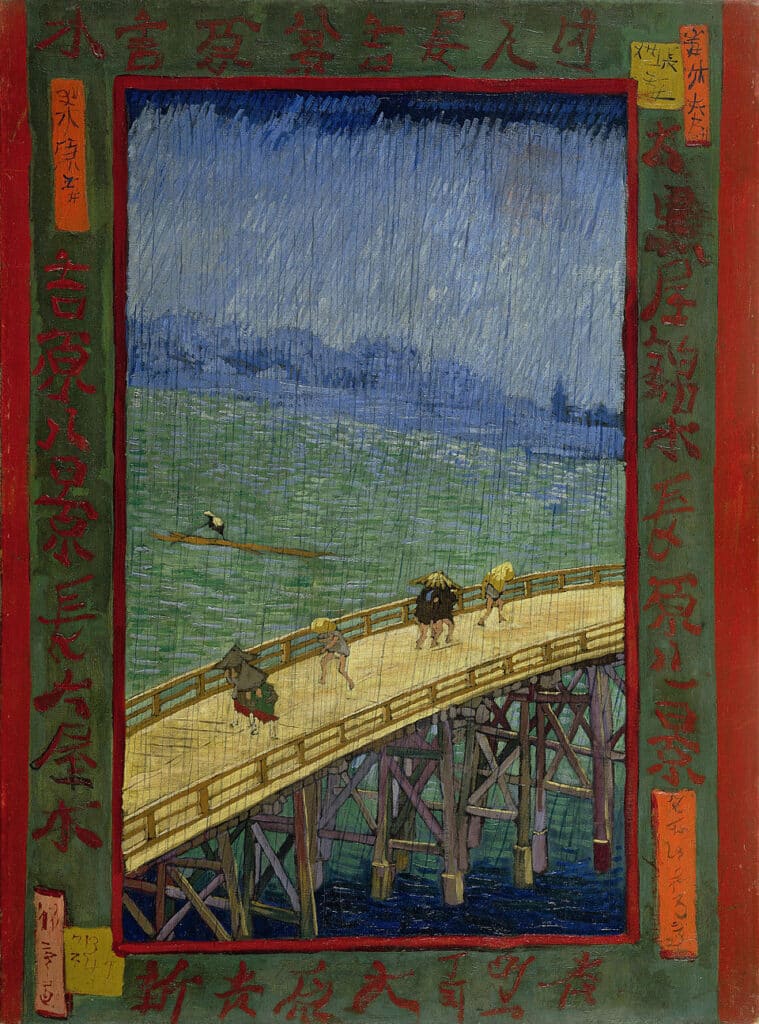
The arrival of Japanese woodblock prints in Europe in the 19th century paved the way for the influx of a new style and perspective. Artists such as Vincent van Gogh, Claude Monet, Edgar Degas, Henri de Toulouse-Lautrec were inspired by the composition, flat color surface, and linearity of Japanese woodblock prints. The phenomenon was called Japanese (Japanism) and is a key pillar of Western artistic avant-garde. World art changed radically, as European schools began to adopt elements of Eastern aesthetics, creating a new visual vocabulary.
The legacy of Ukiyo-e in modern art
The artistic legacy of Ukiyo-e transcends the historical boundaries of the Edo period and extends dynamically into contemporary visual production. Their influence is evident in a multitude of contemporary art forms. From graphic design and illustration to tattoo art, fashion, animation and digital design. The flat color surfaces, the emphasis on line and the asymmetrical composition formed the foundations for modern and postmodern artistic movements. The alternative use of perspective was also a foundation.
At the same time, the aesthetics of ukiyo-e permeate modern Japanese visual culture, directly influencing manga, anime and the visual storytelling language of the East. On a global level, many contemporary artists are reinterpreting ukiyo-e motifs through digital media. They combine traditional techniques with modern tools. This proves that the philosophy of the «transient world» remains relevant and essential in today’s era of speed and image.
Conclusions
The art of Ukiyo-e is a comprehensive cultural phenomenon that combines aesthetics, technical excellence and philosophical depth. Through the depiction of the ephemeral, everyday life and human experience, Japanese woodblock prints managed to capture the present. These moments became timeless works of art. The systematic use of natural materials is indicative. The collaborative production process reflects high technical precision. These prove that Ukiyo-e was not simply a folk art. It was a mature form of artistic expression with a clear aesthetic orientation.
At the same time, its timeless influence extends from European impressionism to contemporary digital and visual practices. This influence confirms its enduring value. It also demonstrates its ability to adapt to new cultural contexts. Ukiyo-e remains a living reference point. It reminds us that art can bridge eras, cultures, and media. The power of image and meaning remains intact.