
Import
Symmetry in art has long been associated with the concept of beauty. From Plato’s philosophical approaches to modern aesthetic theories, balance and proportion are considered fundamental elements of a «correct» work. However, if we take a closer look at the art that truly influences us, we notice something more complex: the works that remain in our memories are not always the perfectly symmetrical ones, but those that contain a controlled imperfection.
The concept of symmetry is not limited to visual balance, but is also associated with mathematical patterns that appear in nature. The sequence Fibonacci, for example, describes growth patterns found in plants, shells, and natural structures, while the number Pi is associated with the perfection of the circle. However, even these ’perfect“ mathematical systems appear in nature with slight deviations, reinforcing the idea that true beauty lies in imperfection.
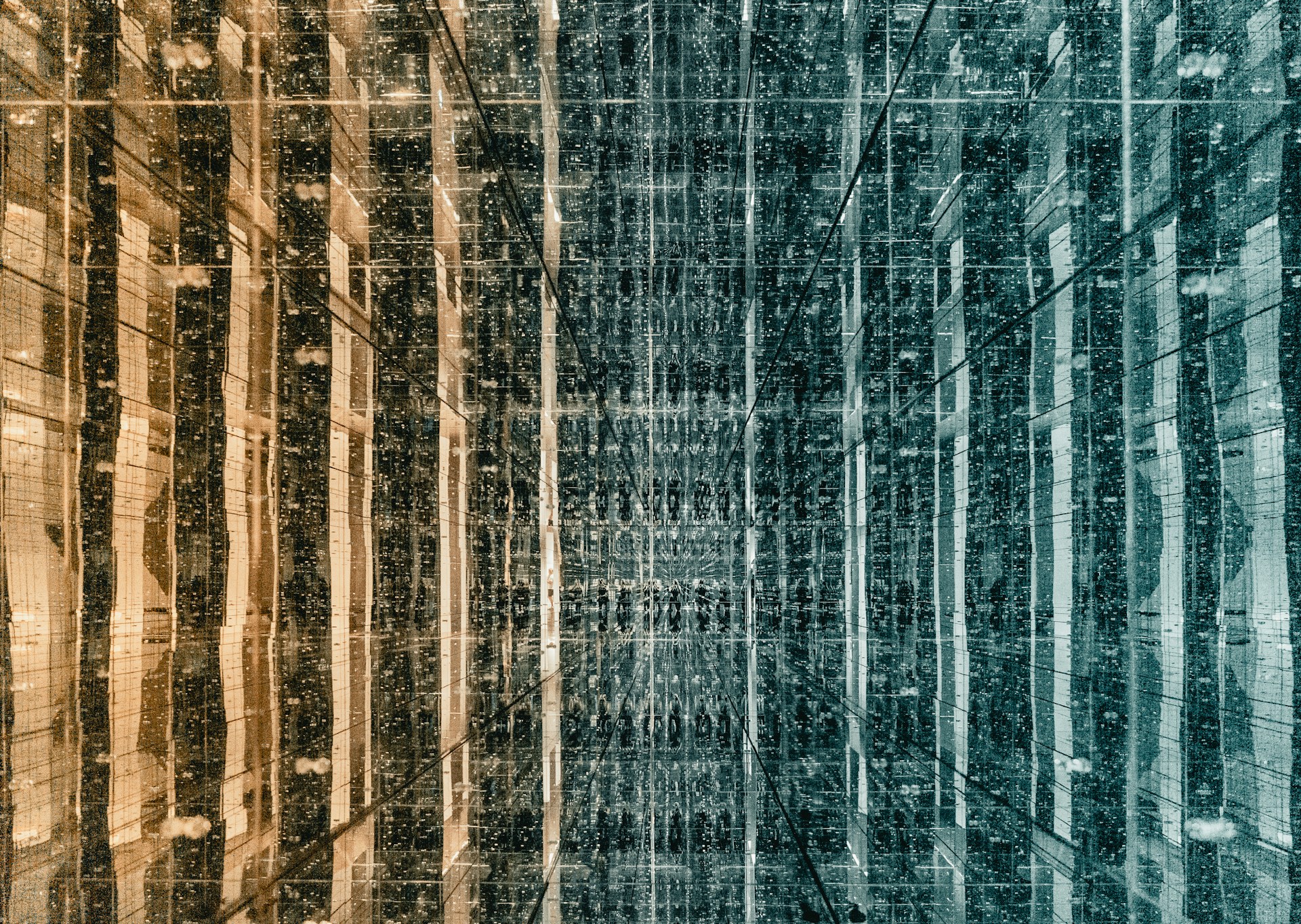
The "illusion of symmetry" is not just about the image, but about the way the brain interprets reality. We recognize symmetry in art as something familiar, but we are moved by what disrupts it.
Contents
Symmetry as a mechanism of understanding
Symmetry functions as an organizing tool. When a work is symmetrical, the viewer can process it immediately, without cognitive effort. This is why we find it prominently in classical art and architecture.
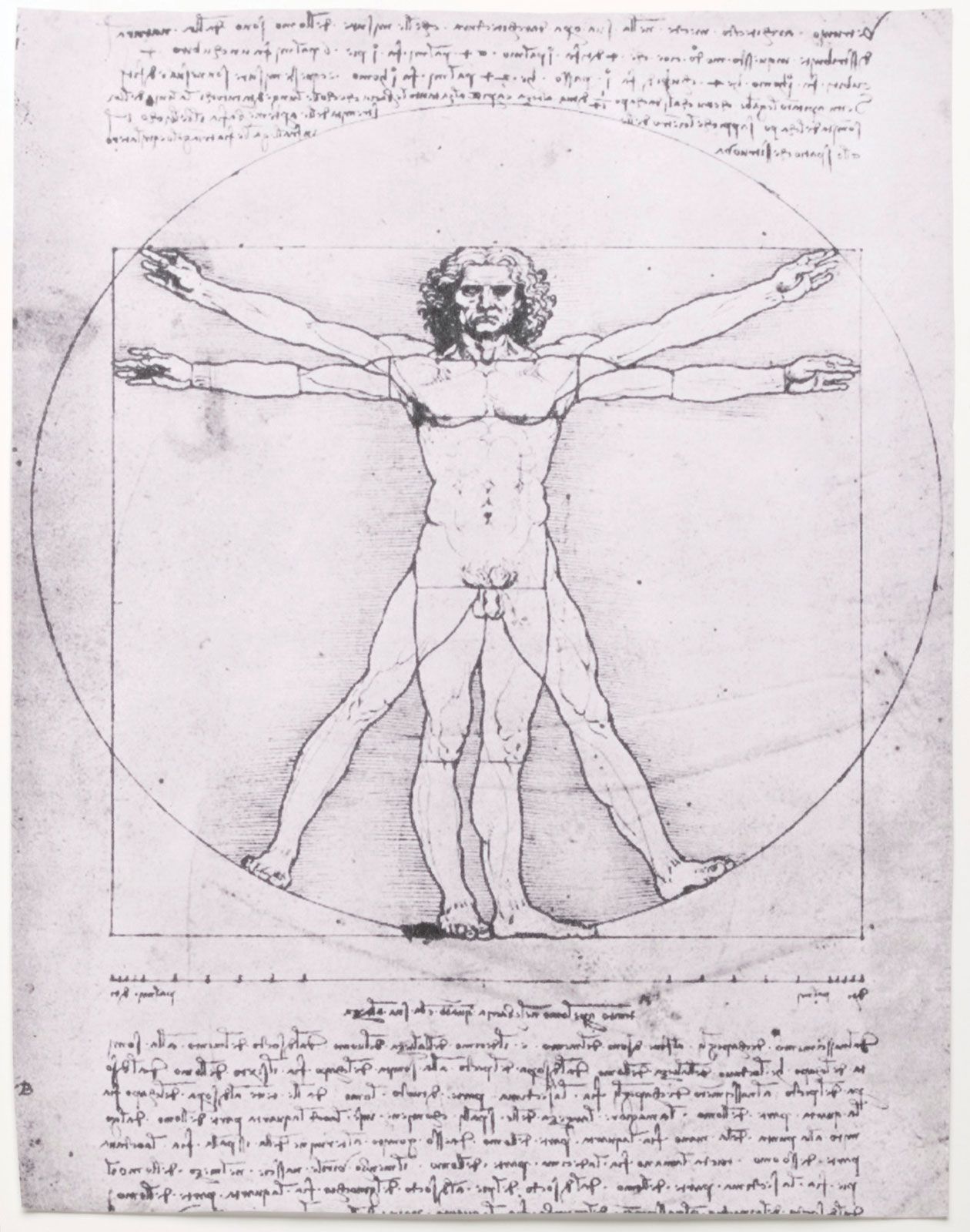
A typical example is the Vitruvian Man by Leonardo da Vinci. The work is based on perfect proportions and geometric balance, capturing the idea that the human body is a measure of harmony. The symmetry here creates a sense of perfection and order, but at the same time limits emotional tension.
The illusion of perfection
Absolute symmetry in art creates the impression of perfection, but this perfection rarely exists in nature. Even in the most “beautiful” faces, if we split them in half and mirror each side, the result looks unnatural.
This proves that the brain is not looking for perfect symmetry, but for a balanced asymmetry. The small deviation is what makes something look real. When this is missing, the result looks almost artificial, as if it has lost its human dimension.
The power of asymmetry in art
Asymmetry introduces tension, and tension is necessary to maintain interest. When a work is not perfectly balanced, the gaze does not “stop”, but is constantly moving.
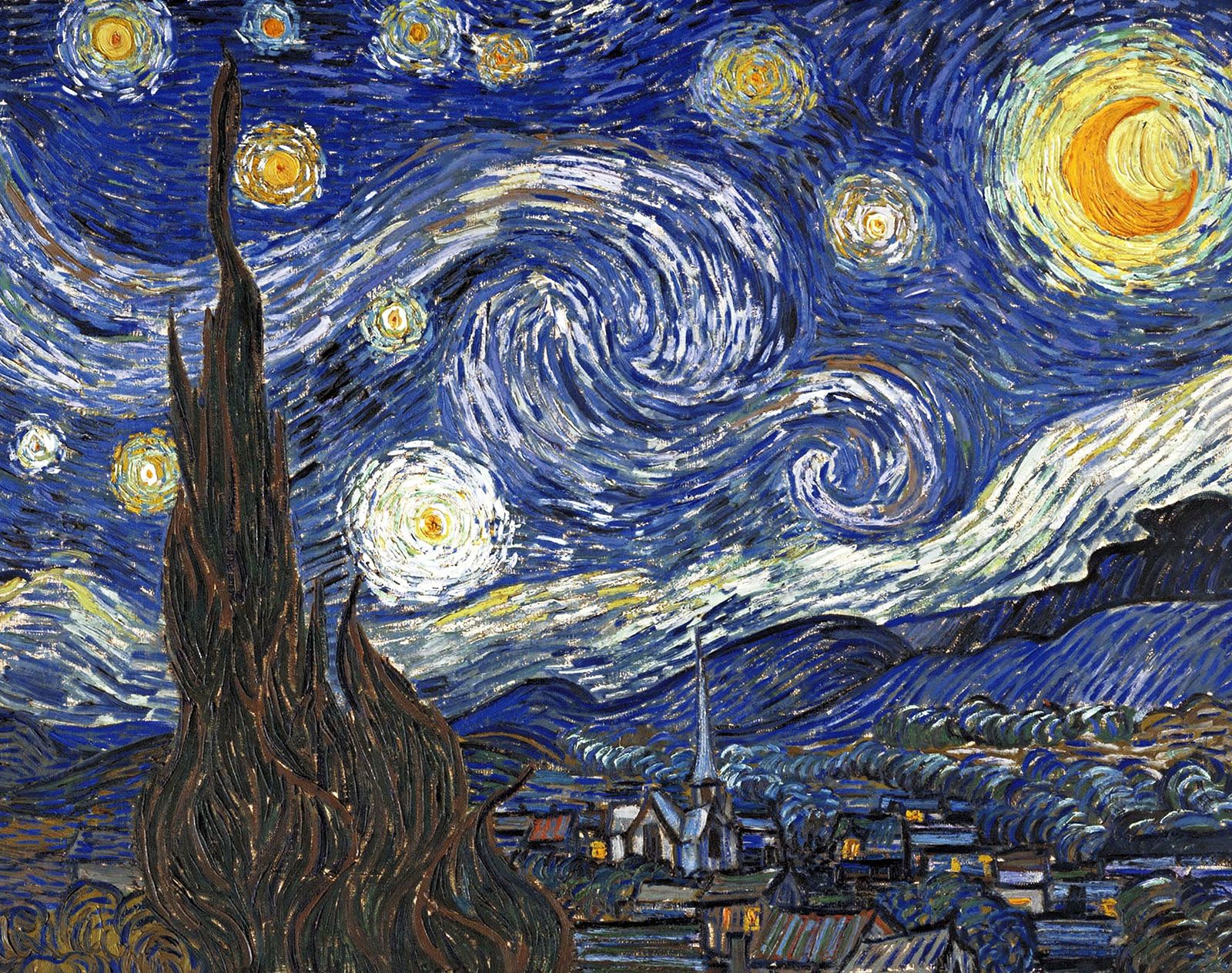
A typical example is the project Enastri Night by Vincent Van Gogh. The composition is not symmetrical, the sky dominates, the elements move with intensity and nothing is completely stable. And yet, it is precisely this asymmetry that creates the emotion and intense experience that characterizes the work.
“Imperfect” as a sign of authenticity
Imperfection in art acts as a sign of authenticity. Unlike perfect balance, which can seem cold, imperfection adds character.
In the works of Pablo Picasso, for example, faces often appear distorted or asymmetrical. This choice is not a technical error, but a conscious decision that enhances expression. The result is not “beautiful” in the classical sense, but is intensely human and immediate.
The balance between symmetry and asymmetry
The essence of art lies not in absolute symmetry or complete asymmetry, but in the relationship between the two. Symmetry provides the foundation, while asymmetry introduces energy.
A work that is completely symmetrical can seem static, while a completely asymmetrical one can seem chaotic. Success lies in the delicate balance, where the viewer feels that something is “not quite right” and that is precisely why they cannot stop looking at it.
Conclusion
The attraction to imperfection is not accidental. It is a result of the way the brain perceives reality and seeks meaning through small deviations. Symmetry in art gives us security, but asymmetry keeps us alert.
Ultimately, what makes a work truly powerful is not its perfection, but the balance between order and chaos. It is there, at the point where symmetry “breaks,” that the authentic experience of art is born.
But perhaps symmetry in art is not just an aesthetic concept, but also a mathematical one. From the Fibonacci sequence to the number Π, art seems to hide a deeper geometry...

[…] with absolute precision. As we saw in the previous article on symmetry, the real power of art often lies in […]