
In the 1860s and after, with the opening of Japan to international trade, the West was exposed to an explosion of visual stimuli. Woodblock prints, color prints (ukiyo-e), lacquerware, textiles, fans, and an aesthetic that seemed radically different from the European tradition. This "fashion" and intellectual shift became known as Japanism (Japanese) and influenced painters such as Monet, Whistler, Toulouse-Lautrec, but also deeply Vincent van Gogh and Paul Gauguin.
Table of Contents
1. When and how did Japanism arrive in Europe?
Japan, after over two centuries of relative isolation, opened its doors to foreign trade in the early 1850s, and in particular with the 1853 expedition of Matthew C. Perry to Tokyo Bay. The result was an influx of Japanese artefacts into Europe, including woodblock prints (ukiyo-e), porcelain, textiles and lacquerware.
The first prominent exhibitions of Japanese art and decorative objects took place during the international exhibitions in London (1862) and Paris (1867), which created the context for a mass acceptance of the aesthetics of the "Oriental". The French word «"Japonism"» It is attributed to the art critic Philippe Burty, who first used it around 1872 to describe this new trend.
The establishment of the term is also noted in encyclopedic sources: "Japanism began in the mid-19th century … after Japanese trade with the West was opened". (Britannica – Japanism)
2. Why it became popular in the West
There were many factors that contributed to the spread and acceptance of Japonisme in European art:
- Decongestion from the traditional style: European painters were looking for new expressive means, as traditional perspective and shading seemed to have exhausted their potential.
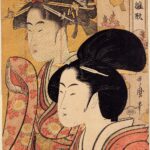
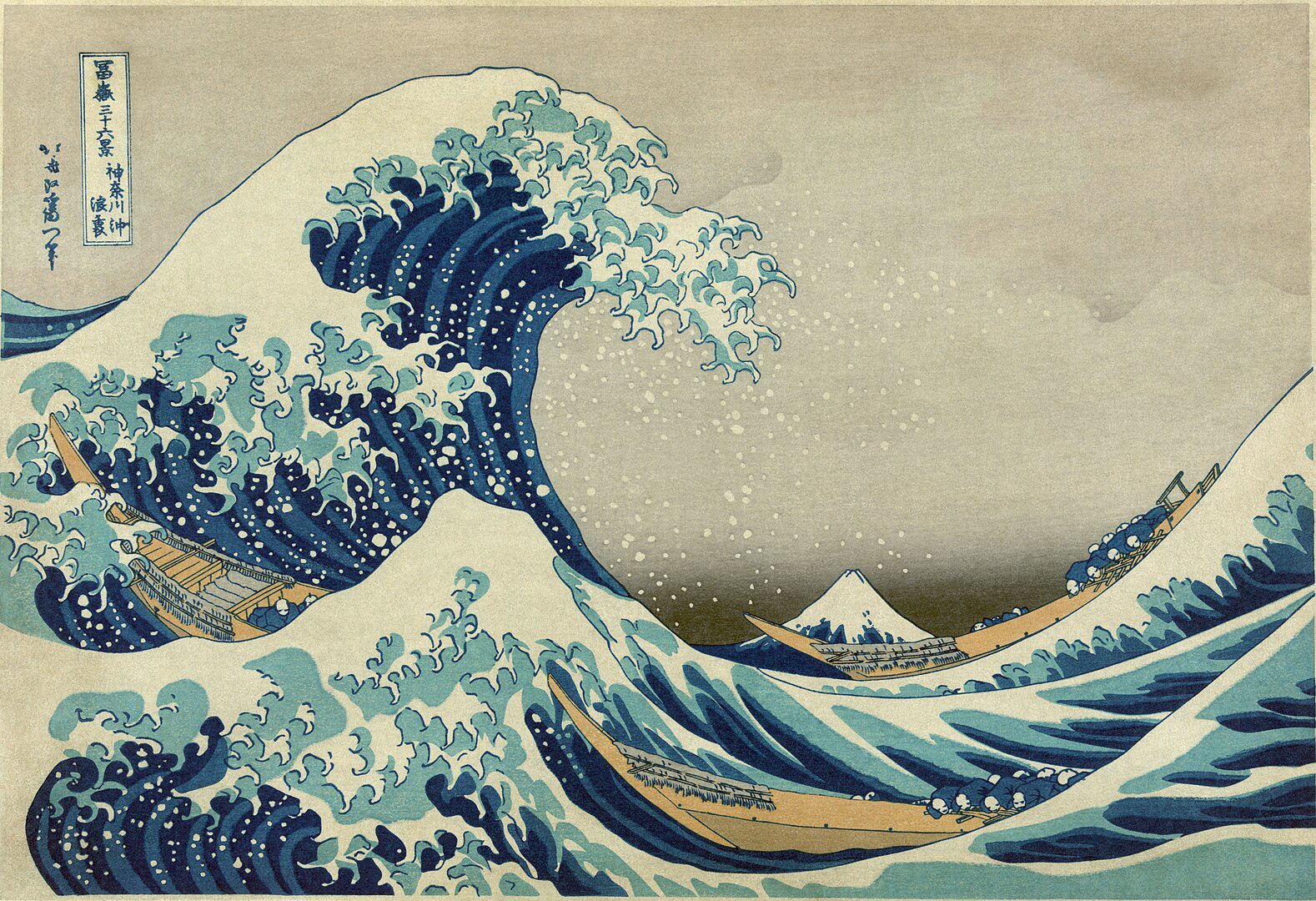
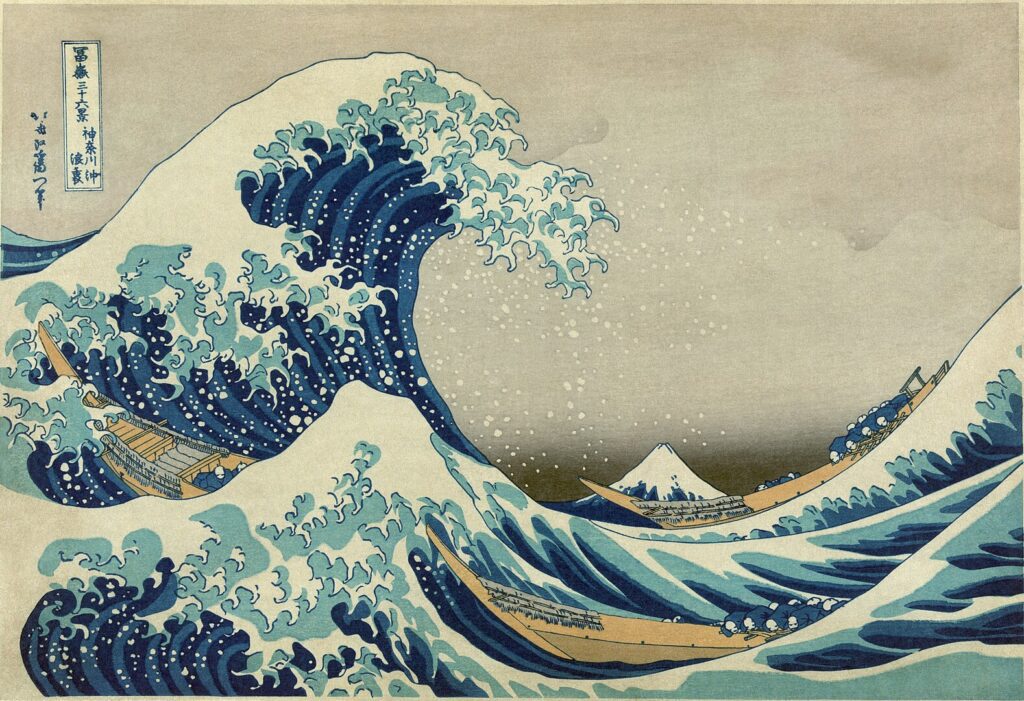
- Visual freshness: Ukiyo-e prints were distinguished by their flat areas of pure color, strong outlines, and asymmetrical compositions. Elements that impressed painters such as Monet and Van Gogh. (NGV – Japonisme exhibition)
- Mass distribution of engravings: Ukiyo-e was already being produced for widespread use in Japan, which made it more accessible for their introduction to Europe and their study by artists.
- Decorative and material influence: Porcelain, textiles, and furniture with Japanese motifs became "exotic" objects of care and collection, and their use enhanced the popularity of the aesthetic. (Barnebys – How Japanese Art Conquered Europe)
3. How did Japanese influences reach Europe?
Following the international exhibitions (London 1862, Paris 1867) and through dealers/collectors, Japanese objects and prints were introduced to European markets. Critics such as Philippe Burty coined the term “Japonisme” to describe this fashion. European artists began to collect ukiyo-e, study them and incorporate them into their practices, often as an antidote to established practices.
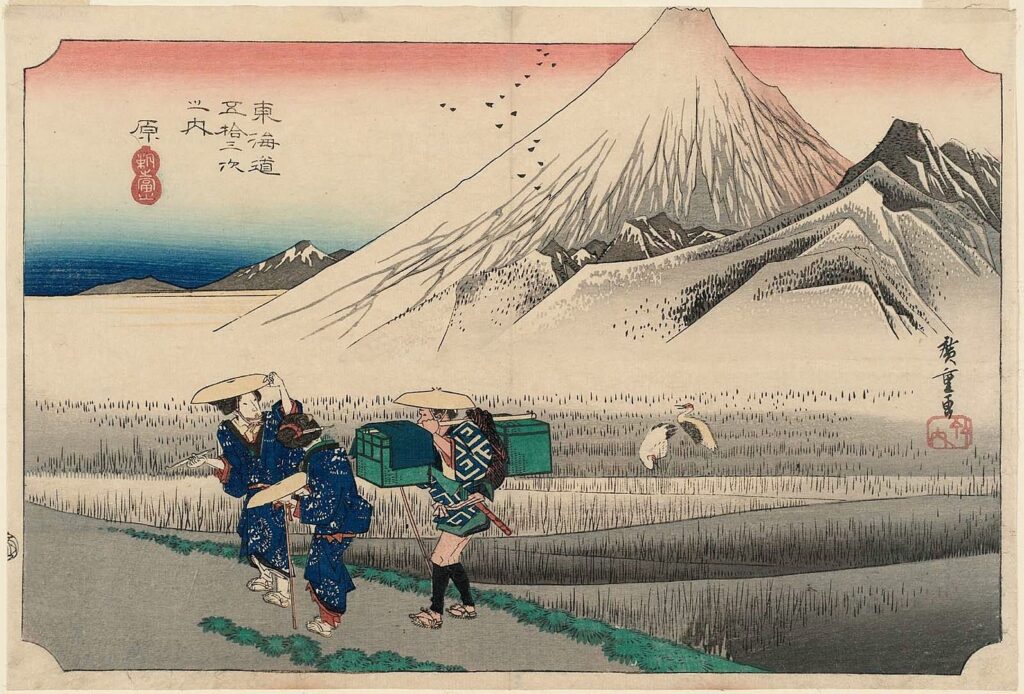
Database of the Museum of Fine Arts, Boston
4. How did it influence the painting of Western artists?
The influence of Japonisme on European painting can be seen in four basic morphological points:
- Flatness and color: The rejection of strong perspective and shading and their replacement by flat color fields. Van Gogh after 1886 presented clearer colors and flatter forms. (Mayching M. Kao – Van Gogh and Japonisme)
- Asymmetrical compositions / cuts: Japanese woodblock prints used open frames, "cut" figurative elements, and asymmetrical balances, elements that were adopted by European painters.
- Clean outline/line: The use of outlines and clear forms without multiple shading — an element that appears in works by Van Gogh and Gauguin.
- Simplicity as an expression: Japanese aesthetics valued economy of form — fewer elements, greater power in the "little.".
5. Japonism in Van Gogh and Gauguin
■ Vincent van Gogh: A collector of Japanese prints from the mid-1880s, Van Gogh turned their study into a personal vocabulary. In a letter to his brother Theo, he wrote: «All my art is based in a way on the Japanese spirit.» (Mayching M. Kao – Van Gogh and Japonisme)
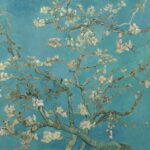
Example: The project Almond Blossom (1890) It shows a horizontal almond branch with bright colors and a light background, where form and color prevail over perspective, characteristic elements of Japanese influence.
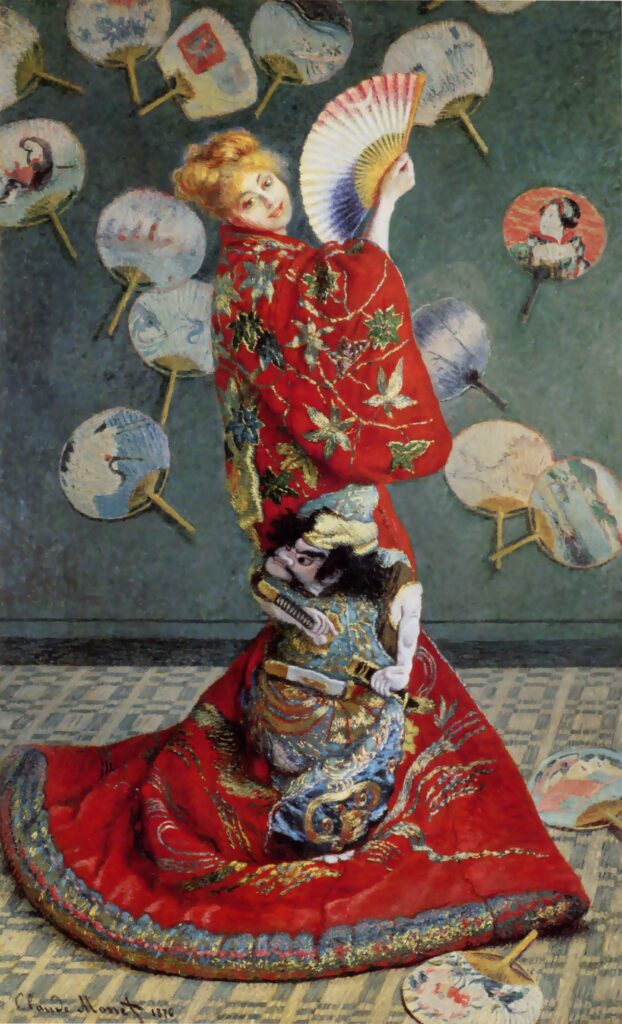
■ Paul Gauguin: Unlike Van Gogh, Gauguin adopted Japonism on a more abstract/symbolic level, combining Japanese elements with Pacific motifs and “primitivism.” Painters of the period also adopted elements of flat composition, pure colors, and decorative influences from Japan.
Also read the article about Japonism in Van Gogh's works https://artringe.com/2025/11/09/japonisme-van-gogh/
6. Summary
Japonism was not a simple fashion but a creative «window» that allowed European painters to rethink their relationship with color, composition, and image. Just as a stone falling into water causes ripples around it, so the Japonism movement at the time brought something new to the traditional view of artists. Of course, this in itself does not say anything, since it had to be incorporated as a style by the artists, which was done successfully. This shows us that the painters of the time acquired a new view of a new world. In Van Gogh, the Japanese element becomes a tool that leads to a clearer, more expressive painting that combines European intensity and Oriental economy.
For the public, the study of Japanism "revives" the way art meets cultures, how "foreign" things are assimilated and transformed, and how even today ideas travel across borders.